ECM Mechanika
ECM's mirror-polished stainless heat exchanger, made in several generations. The Slims are narrow tank machines, and the IV Profi and Max add a rotary pump and plumb-in.

Every generation is built well and the E61 ones are simple to service, so the real job is matching the generation to the setup you want.
Which one to buy
Snapshot · Oct 19, 2026Nobody's selling a Mechanika in the US right now. The ones listed ship from Australia or Germany as 230–240V machines, which need a 240V circuit or a big step-up transformer, and with freight they ask $2,775–3,825 delivered. Most US buyers should wait for a domestic one. If you import, ask which generation it is. Joystick valves mean a IV, and a display under the group means a VI Slim or Max.
- Listed now
- 24
- For parts
- 0
- Typical ask
- $2,775–$3,825
- Full range
- $1,996–$3,670
Live on eBay right now
7 of 24 listedCaptured . Some will have sold.
Delivered prices include shipping as eBay quoted it to a US address on Oct 19, 2026. Many sellers charge by distance, so your total may differ; eBay shows your exact total before you buy.
 Used
Pre Loved ECM MECHANIKA In Black E61 Semi Commercial Coffee Machine
$2,412.94est. delivered
$1,996.18 + $416.76 shipping
Buy It Now$1,996.18
Offers accepted
This seller takes offers, and sellers often accept less than the asking price.
Fine if you might miss it? Send an offer first. Someone else can still buy it while you wait for a reply.
Want it for sure? Use Buy It Now.
Our take
Pre-loved, from Australia, so 240V. $417 of the price is shipping.
Seller: dipaccicoffeeco
99% positive
 New
ECM espresso machine Mechanika V Slim 82045, free ship Worldwide
$2,900.00delivered
$2,900.00 · free shipping
Buy It Now$2,900.00
Our take
New Mechanika V Slim from Germany with free shipping. A 230V European model.
Seller: marven23
100% positive
 New
ECM Mechanika Slim White with Timber Kit Coffee Machine
$3,691.00est. delivered
$3,274.24 + $416.76 shipping
Buy It Now$3,274.24
Offers accepted
This seller takes offers, and sellers often accept less than the asking price.
Fine if you might miss it? Send an offer first. Someone else can still buy it while you wait for a reply.
Want it for sure? Use Buy It Now.
Our take
New Slim with a timber kit, from Australia. 240V.
Seller: dipaccicoffeeco
99% positive
 New
ECM Mechanika MAX Coffee Machine
$4,226.12est. delivered
$3,670.44 + $555.68 shipping
Buy It Now$3,670.44
Our take
New Mechanika Max from Australia. 240V.
Seller: dipaccicoffeeco
99% positive
 New
- Check the seller
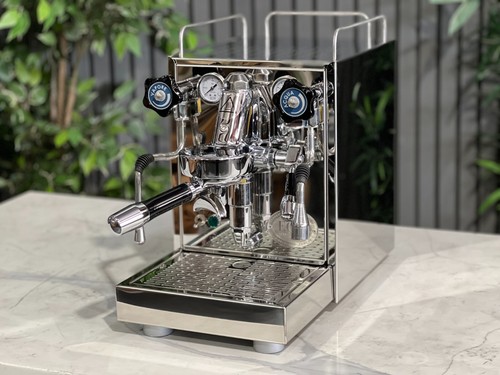
ECM MECHANIKA VI SLIM 1 GROUP ESPRESSO COFFEE MACHINE BRAND NEW STAINLESS STEEL
$4,191.91est. delivered
$2,629.06 + $1,562.85 shipping
Buy It Now$2,629.06
Offers accepted
This seller takes offers, and sellers often accept less than the asking price.
Fine if you might miss it? Send an offer first. Someone else can still buy it while you wait for a reply.
Want it for sure? Use Buy It Now.
Heads-up: check the seller
New VI Slim from Australia with $1,563 of freight, from a 92.9% seller. 240V.
Seller: coffeemachinewarehouse0414909911
92.9% positive
 New
- Check the seller
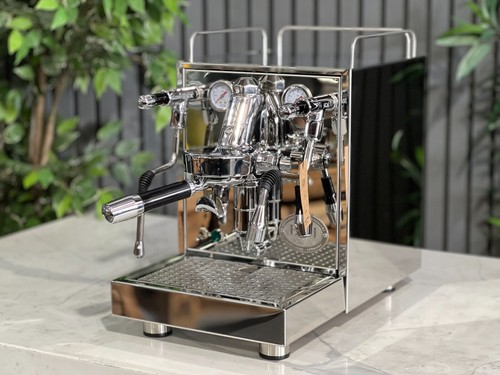
ECM MECHANIKA SLIM PID 1 GROUP ESPRESSO COFFEE MACHINE BRAND NEW STAINLESS HOME
$4,473.22est. delivered
$2,910.37 + $1,562.85 shipping
Buy It Now$2,910.37
Offers accepted
This seller takes offers, and sellers often accept less than the asking price.
Fine if you might miss it? Send an offer first. Someone else can still buy it while you wait for a reply.
Want it for sure? Use Buy It Now.
Heads-up: check the seller
New Slim PID from Australia with $1,563 of freight, from a 92.9% seller. 240V.
Seller: coffeemachinewarehouse0414909911
92.9% positive
 New
- Check the seller
ECM MECHANIKA MAX 1 GROUP ESPRESSO COFFEE MACHINE BRAND NEW STAINLESS HOME LATTE
$4,824.00est. delivered
$3,261.15 + $1,562.85 shipping
Buy It Now$3,261.15
Offers accepted
This seller takes offers, and sellers often accept less than the asking price.
Fine if you might miss it? Send an offer first. Someone else can still buy it while you wait for a reply.
Want it for sure? Use Buy It Now.
Heads-up: check the seller
New Max from Australia with $1,563 of freight, from a 92.9% seller. 240V.
Seller: coffeemachinewarehouse0414909911
92.9% positive
Prices and stock change daily. The live search shows everything listed now.
View all on eBay ↗The short version
ECM's mirror-polished stainless heat exchanger, made in several generations. The Slims are narrow tank machines, and the IV Profi and Max add a rotary pump and plumb-in.
Someone after a beautifully built heat exchanger, either a slim one for a tight kitchen or a quiet rotary one to plumb in.
- Group
- E61 on the IV, V Slim and VI Slim; the Max II uses a cartridge-heated group
- Boiler
- Stainless heat exchanger. 2.2 liters on the V Slim, about 1.9 liters on the VI Slim and Max, about 2 liters on the Max II
- Pump
- Rotary on the IV Profi, Max and Max II; vibration pump on the VI Slim
- Water
- Tank only on the Slims; tank or direct plumbing on the IV Profi, Max and Max II
- Temperature control
- Pressurestat on the IV and V Slim; PID on the VI Slim, Max and Max II
- Portafilter
- 58mm
Things to weigh
Generation decides almost everything. A V Slim and a Max share a name and little else, so price and compare them as different machines.
Only the IV Profi, Max and Max II take a water line. The Slims are tank machines.
The VI Slim and the Max family have PIDs. The IV and V Slim run a pressurestat, so expect the usual heat exchanger cooling flush.
Mirror-polished stainless shows every fingerprint and swirl in photos. That's cosmetic, so focus on what's inside.
The inspection punch-list
Red means walk away. Yellow means budget for it. Green is a good sign.
History and versions
ECM was founded in Germany in 1996 by Wolfgang Hauck and has built its machines in-house in Milan since 2007. The Mechanika is its stainless heat exchanger. The Mechanika IV came as a tank machine and as a Profi with a rotary pump, switchable water source, joystick valves and no PID. The V Slim stood its 2.2 liter boiler on end, which cut the width from about 12 to 9.8 inches. The VI Slim moved to a 1.9 liter boiler with a three-step PID and a shot timer. The Max is a rotary, plumbable machine with a 1.9 liter boiler and a PID, and the Max II adds a cartridge-heated group, adjustable pre-infusion and an OLED display. A Slim fits a small kitchen, and a Max is the one to plumb in.
Also worth a look
It's a stainless-boiler E61 with a vibe pump and a simple PID, so a clean one rarely needs more than descaling and a gasket kit.
It's simple inside, but the run spans several generations of boiler and control board, so pin down which one you're getting.
Its boilers, rotary pump and E61 group are standard dual-boiler hardware, so a well-kept one stays serviceable for years.
What else you'll need
Links go straight to eBay and Amazon, with no tracking. We earn nothing from them.
Espresso grinder
- Baratza Encore ESP. 40mm conical burrs, with finer steps in the espresso range.
- Breville Smart Grinder Pro. Conical burrs, 60 settings, 54 and 58mm cradles.
- Eureka Mignon Specialita. 55mm flat burrs, stepless, timed dosing.
- Turin DF64 Gen 2. 64mm flat burrs, single dose.
58mm portafilters and baskets (58mm machines only)
- Bottomless portafilter for your group. Swap E61 for your group's name. Handles don't fit across brands.
- 58mm precision basket. Even holes, more consistent shots.
Prep tools
- Tamper sized to your basket. Swap 58mm for 54mm on a Breville.
- WDT distribution tool. Breaks up clumps before you tamp.
- Espresso scale with timer. Weigh dose and yield.
Cleaning and water
- Urnex Cafiza. For backflushing machines with a 3-way valve.
- Descaler. Follow your machine's manual.
- Group gasket and shower screen. Add your model to the search.
- Water hardness test strips. Check your water before it scales the boiler.
Questions buyers ask
Which Mechanika can be plumbed in?
The IV Profi, the Max and the Max II. The Max II switches between its tank and a direct water connection, with a metal hose in the box, while the Slims run from the tank only.
Does the Mechanika have a PID?
The VI Slim and the Max family do. The IV and V Slim use a mechanical pressurestat, and some V Slim owners add a PID themselves.
Is the Mechanika Max an E61?
The Max II isn't. It has a cartridge-heated group with its own brew temperature control, so if you want a classic E61, look at the Slims or the IV.
Sources
- ECM Mechanika VI Slim product page
- ECM Mechanika Slim PID product page
- ECM Mechanika Max II product page
- ECM about page
- Whole Latte Love, Mechanika V Slim review
- Whole Latte Love, Mechanika Max product page
- Whole Latte Love, Mechanika Slim PID product page
- Whole Latte Love, Mechanika IV vs Technika V vs Elektronika II Profi
- Home-Barista, Mechanika V Slim PID modification thread
- Home-Barista, rotary pump pressure drop on a new Mechanika Max
- Home-Barista, Mechanika V Slim SSR thread